
Simply put:
-
A trustworthy THCA flower purchase depends on three things: an accredited lab report, visible batch tracking, and hemp that meets the federal 0.3% threshold.
-
Certificates of Analysis should show cannabinoid, terpene, and contaminant results tied to the exact batch in your jar.
-
Storage and freshness matter as much as the initial lab number, since potency and aroma shift over time.
Shoppers searching for a reliable THCA Flower Shop Online are usually trying to solve one problem: how to tell real quality from a flashy product page. The short answer is that verified lab testing, transparent sourcing, and proper batch tracking separate dependable vendors from guesswork. A shop worth trusting will make that verification easy to find rather than burying it in fine print. Shop at Luminate for a transparent shopping experience that helps you make informed decisions when exploring THCA flower products.
The hemp flower market has grown fast enough that quality signals matter more than marketing copy. The 2018 Farm Bill made hemp-derived products containing no more than 0.3% delta-9 THC on a dry-weight basis federally legal, which opened the door for online retail that simply did not exist before. That legal framework is also why lab documentation is not optional. It is the only objective proof that what is in the jar matches what is on the label.
What a Legitimate Certificate of Analysis Actually Shows
A Certificate of Analysis, or COA, is the document that turns a marketing claim into a verifiable fact. Reputable labs test for cannabinoid content, terpene profile, and a panel of contaminants before a batch ever ships.
A complete COA should include:
-
Lab identification: name, accreditation status, and contact information for the testing facility.
-
Batch-specific data: a batch or lot number that matches the packaging in hand, not a generic or reused report.
-
Cannabinoid panel: THCA, delta-9 THC, CBD, CBG, and other minor cannabinoids with specific percentages.
-
Safety screening: results for pesticides, heavy metals, residual solvents, and microbial contaminants.
The single most important line on that document is the delta-9 THC result. According to USDA guidance on hemp production, hemp testing must account for the potential conversion of THCA into THC, with the total available THC calculated from the combined THC and THCA content. That calculation is why a flower batch can carry a high THCA percentage and still qualify as federally compliant hemp, provided the delta-9 figure stays under the legal threshold.
Sourcing Signals That Separate Quality From Guesswork
Lab results tell part of the story, but sourcing practices explain why those results look the way they do. Buyers evaluating any THCA flower shop online should look past the product photos and check how the flower was grown, trimmed, and handled before it reached a jar.
Questions worth asking before ordering:
Is the hemp sourced from documented, compliant farms rather than unnamed suppliers?
- Is trimming done by hand, which tends to preserve trichomes and terpene content better than machine processing?
- Does every batch get tested independently, or only a sample from the harvest?
- Is the COA dated recently, since cannabinoid and terpene levels shift over months in storage?
A shop that answers these questions openly on its product pages is behaving the way a transparent seller should. One that avoids specifics about sourcing or testing frequency is giving a signal of its own.
Comparing Flower Tiers by What Actually Changes
Not every THCA flower is grown or tested the same way, and tier names vary across sellers. The table below outlines what commonly differs between tiers so buyers can judge value beyond price alone.
|
Factor |
Entry-Level Flower |
Mid-Tier Flower |
Premium Flower |
|---|---|---|---|
|
Trim method |
Often machine-trimmed |
Mixed |
Typically hand-trimmed |
|
Trichome density |
Lower |
Moderate |
Higher |
|
THCA range |
Lower end of tested range |
Mid-range |
Higher end, strain-dependent |
|
Batch documentation |
Varies by seller |
Usually available |
Should be standard practice |
Price differences across tiers generally track these production choices rather than marketing alone, which is why checking the COA matters regardless of which tier a buyer chooses.
Storage Habits That Protect What You Paid For
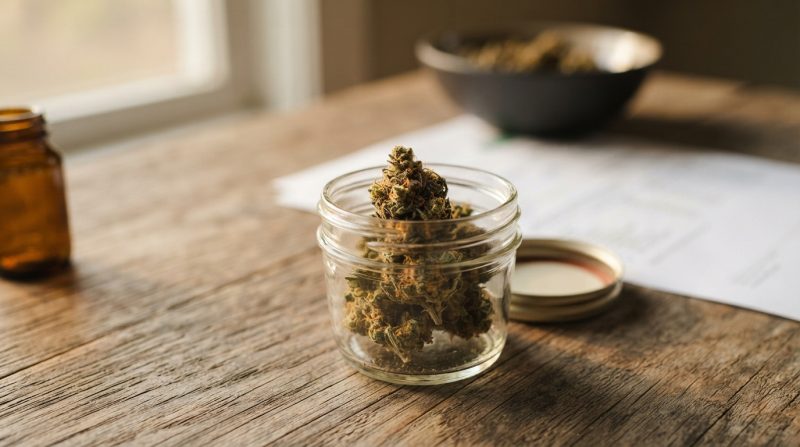
A strong lab report loses its value if the flower is stored poorly after it arrives. Airtight glass containers, humidity packs in the 58 to 62 percent range, and smaller jars that limit air exposure all help preserve potency and aroma over time. Flower stored this way tends to hold most of its characteristics for six months to a year, though appearance and smell remain useful day-to-day indicators of freshness between full lab retests.
Frequently Asked Questions
How do I know if a COA is current? Check the testing date against the batch number on the jar. A report older than six to twelve months may not reflect the flower’s current condition, since cannabinoids and terpenes degrade over time.
Does a high THCA percentage guarantee quality? Not by itself. Potency numbers matter, but a COA that skips the contaminant panel or terpene profile leaves safety and flavor questions unanswered.
Is THCA flower federally legal? Hemp flower that tests at or below 0.3% delta-9 THC on a dry-weight basis meets the federal definition of hemp, though individual state rules can still vary.
What is the easiest red flag to spot? A missing or mismatched batch number is one of the fastest ways to catch a COA that does not actually belong to the product being sold.
Quality in this category comes down to documentation you can check, not claims you have to take on faith. Luminate lists lab-tested, hand-trimmed flower with published batch-specific Certificates of Analysis, which gives buyers a concrete way to apply the standards covered above before they order.